
A & B: Representation of the structure of skin, 40Ca+,
field of view (field of view) 200 x 200 µm2 (A) and 100 x 100 µm2 (B).
C & D: Superimposed ion images (superimposed) of 238U+ (red) and 40Ca+ (green).
Uranium is a heavy radioactive metal naturally present in the Earth's crust. Internal contamination (internal contamination) of nuclear workers by actinide group elements such as uranium can occur through the respiratory tract, digestive tract, or entry through wounds or intact skin; and the SIMS technique is used to assess the movement of uranium through skin. Experiments have been conducted to describe the characteristics of the bioaccumulation (bioaccumulation) of uranium on pig skin. The results show that the stratum corneum (stratum corneum) is a good protective barrier against the penetration of radioactive nuclei into the skin, but it can also serve as a reservoir for the diffusion of these radioactive nuclei if detoxification measures are not applied.
This study was conducted by the IRSN research center (France) and has been patented, and a pharmaceutical laboratory is currently selling a detox cream (Cevidra® Calixarene). Its effectiveness is based on the active ingredient - carboxylic acid calixarene, a chelating agent (chelating agent) with a high affinity for U, Pu, Am, Th, Co, Cs, and Sr, helping to prevent the infiltration of these radioactive nuclei into the body and thus avoiding their fixation on target organs (kidneys, bones, and liver).
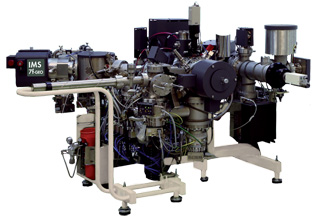
Using the IMS 7f-GEO system, mapping of major elemental species and trace elements can be obtained at the cellular level in biological samples with a lateral resolution (lateral resolution) of ~0.5 μm. Other strengths of the device include flexibility (mass spectrometry analysis, depth profiling, etc.), high processing efficiency, as well as high sensitivity leading to low detection limits for several elements of interest including heavy metals such as uranium...
Cited from: A. Spagnul et al., European Journal of Pharmaceutics and Biopharmaceutics 79(2), 258–267 (2011), DOI 10.1016/j.ejpb.2011.05.004
See also: S. Grives et al., Journal of Pharmaceutical Sciences 104(6), 2008-2017 (2015). DOI 10.1002/jps.24431